And now?
Locations & Work
After Correctiv's investigations into deportation plans and the huge public reaction, we asked ourselves: ‘What now?’ In a workshop held as part of the f/stop-Festivals , Lislesso, Luki Stüwe, Feydrea Vialista and Frieder Bickhardt continued their thinking on posters
Over four weekends, we examined the political situation in Germany. We met during the first few weekends and came together as a group. Who are we? What are our perspectives? We read texts, discussed them and found a way to bring our different perspectives together. Over the last few weekends, we implemented our poster ideas. The idea was to give space to three perspectives at three different locations. You can find the resulting posters here.
Locations & Work
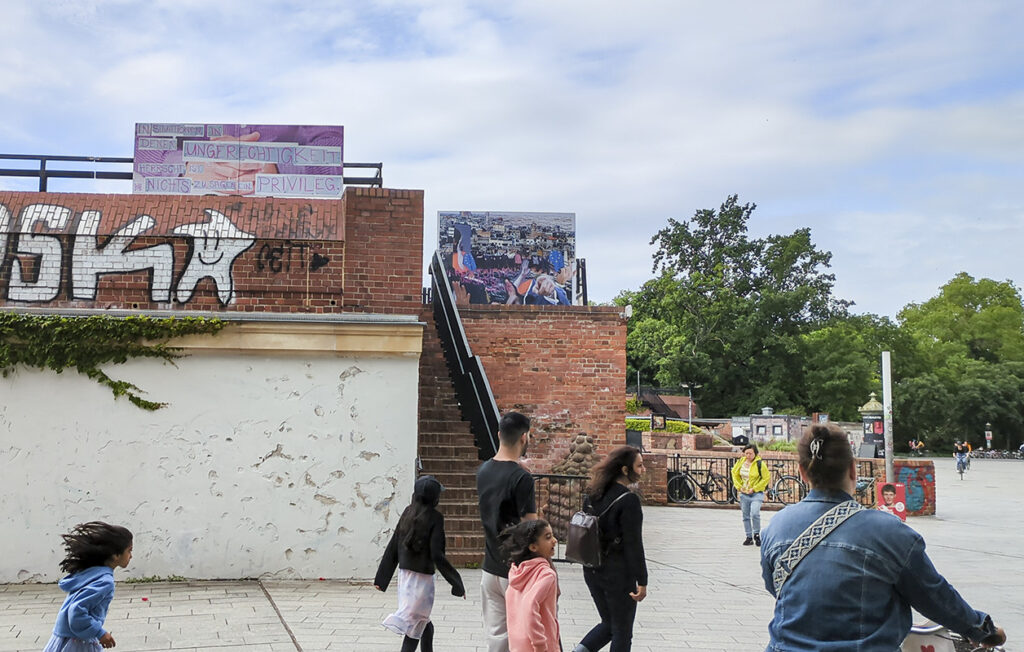
Poster presentation on 9 June 2024
12:00 Held department store, Lützner Straße / corner of Merseburger Straße
13:30 Windmühlenstraße / corner of Emilienstraße
15:00 Moritzbastei, Kurt-Masur-Platz
Plakat von Lislesso und Luki Stüwe
Held department store, Lützner Street corner of Merseburger Street
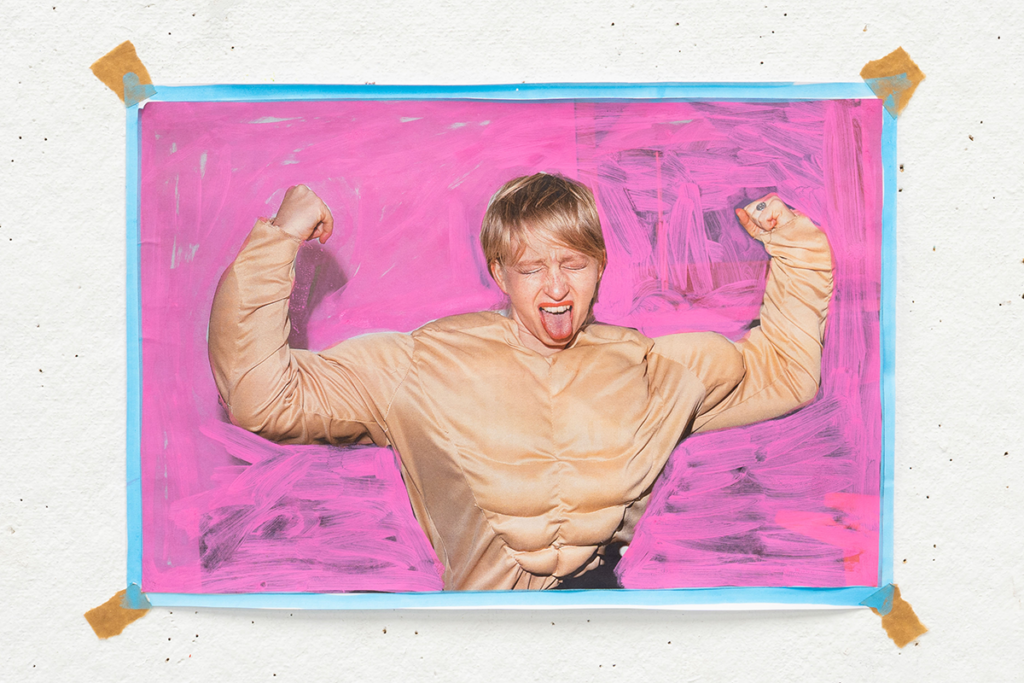
It is challenging to feel like you belong as a queer person in a world that is shaped by heteronormativity. Not to feel too much. In times when queer life is increasingly a thorn in the side of politics and queer feminist spaces are increasingly under threat, it is all the more important to give queer perspectives space and a voice. Or simply space to show themselves. Our work aims to encourage and show that there is space for queer voices. In a world that often tries to silence us, it is all the more important that we tell our stories. Be loud, be queer!
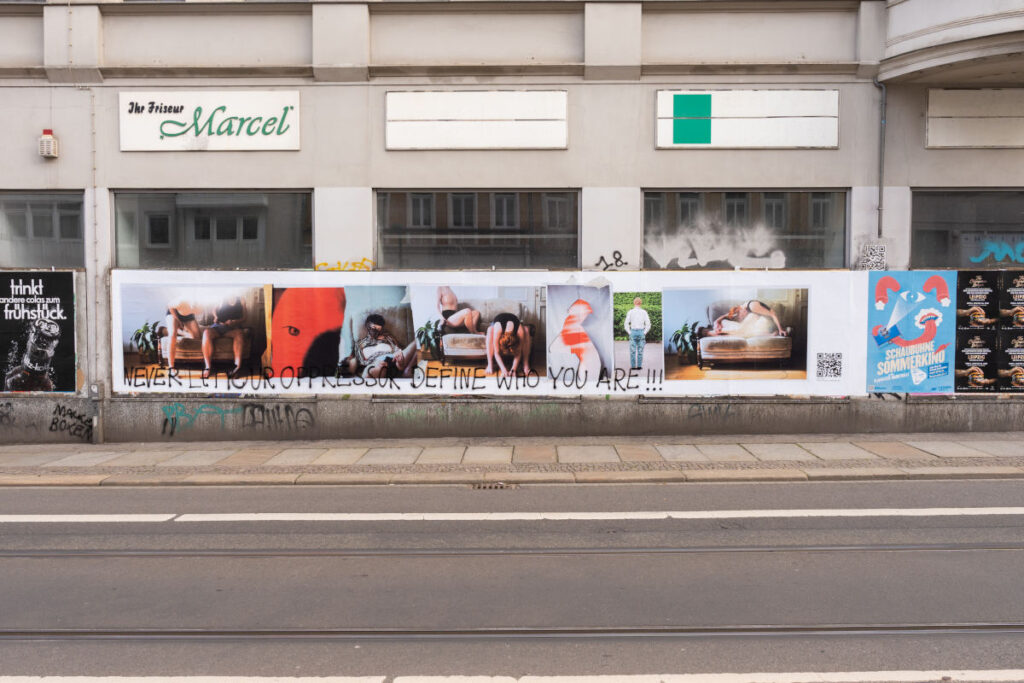
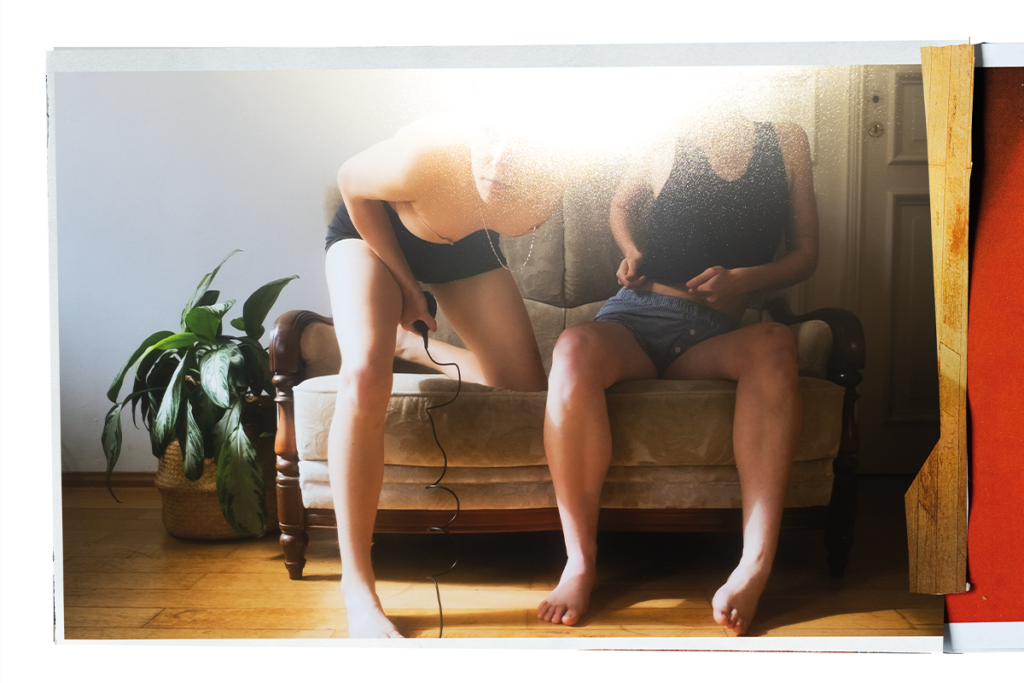
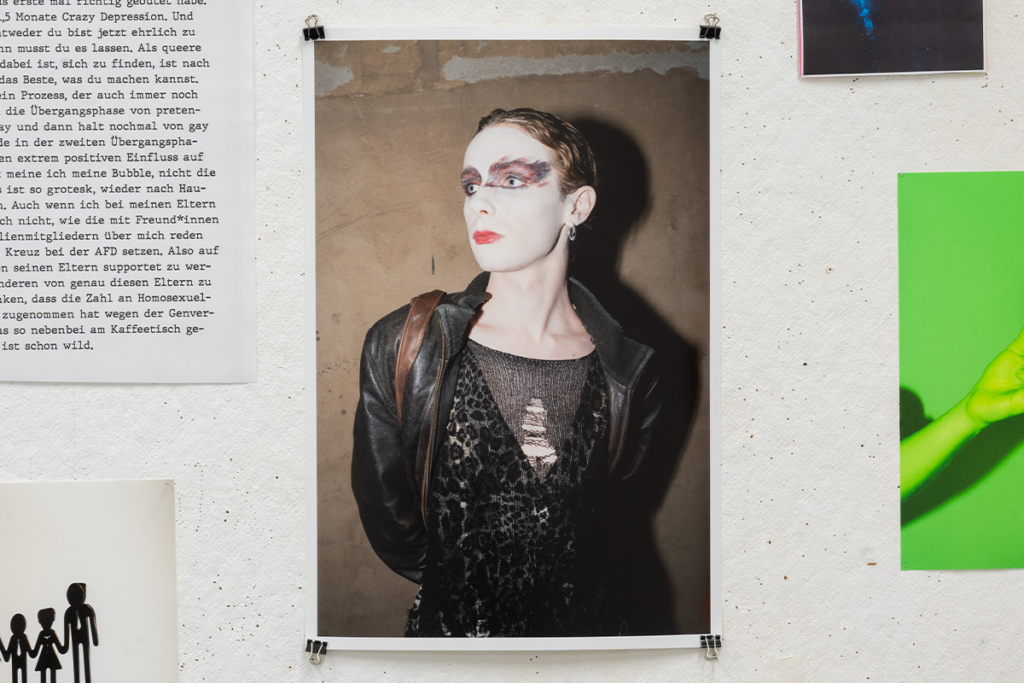
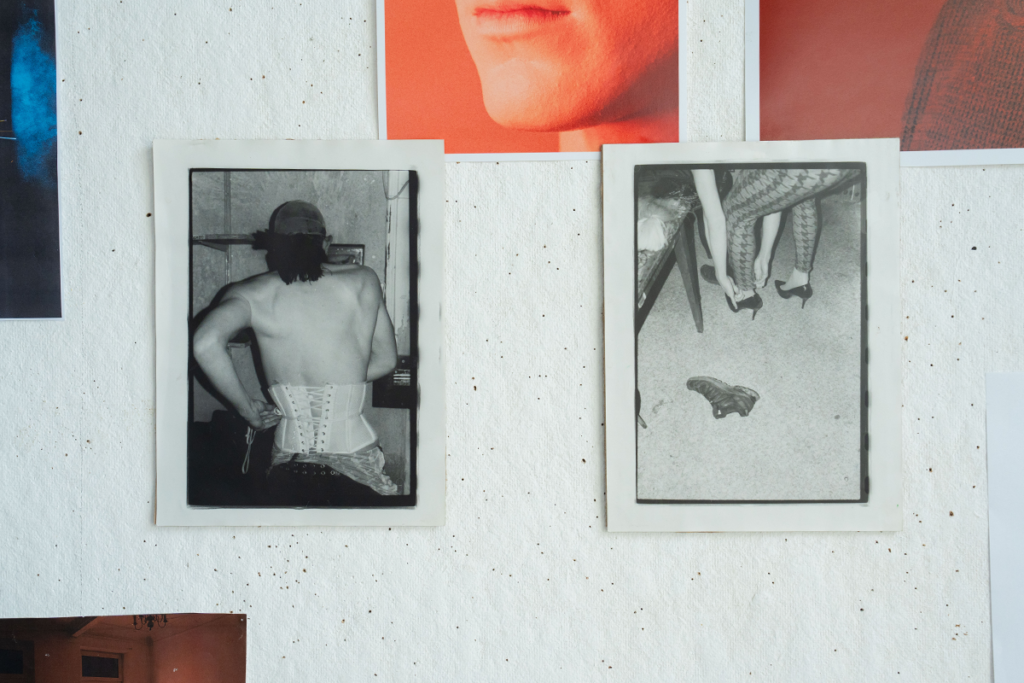
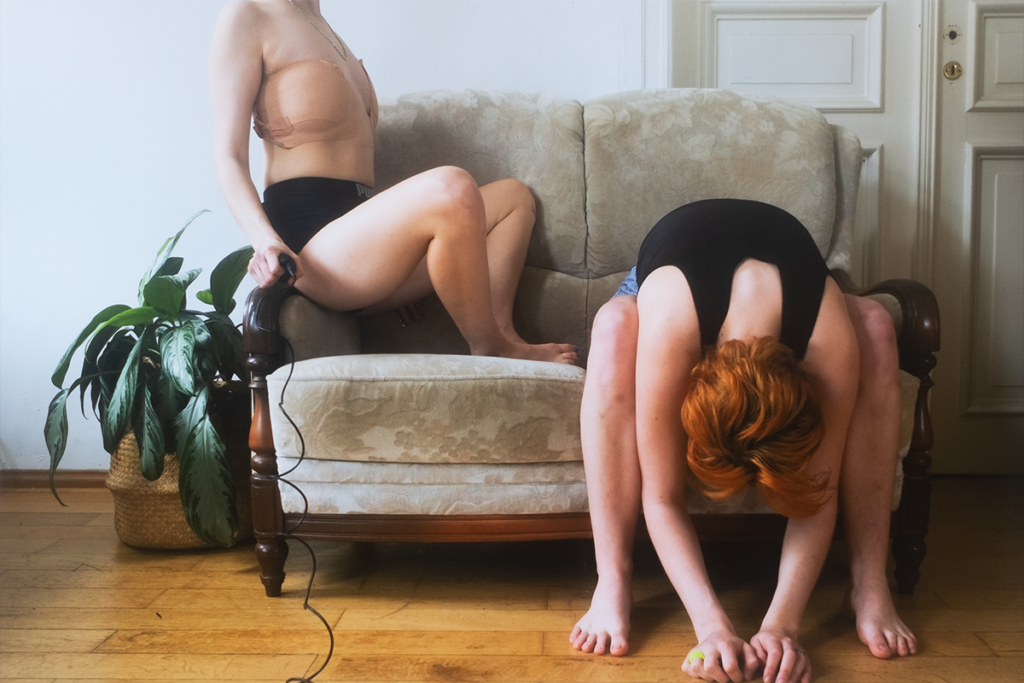
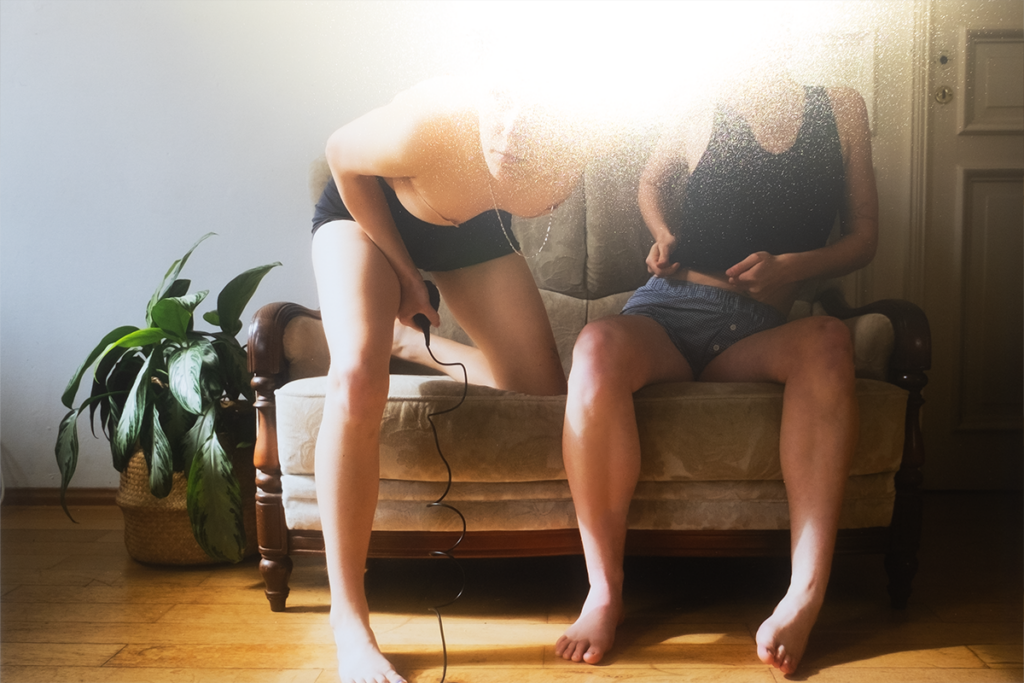
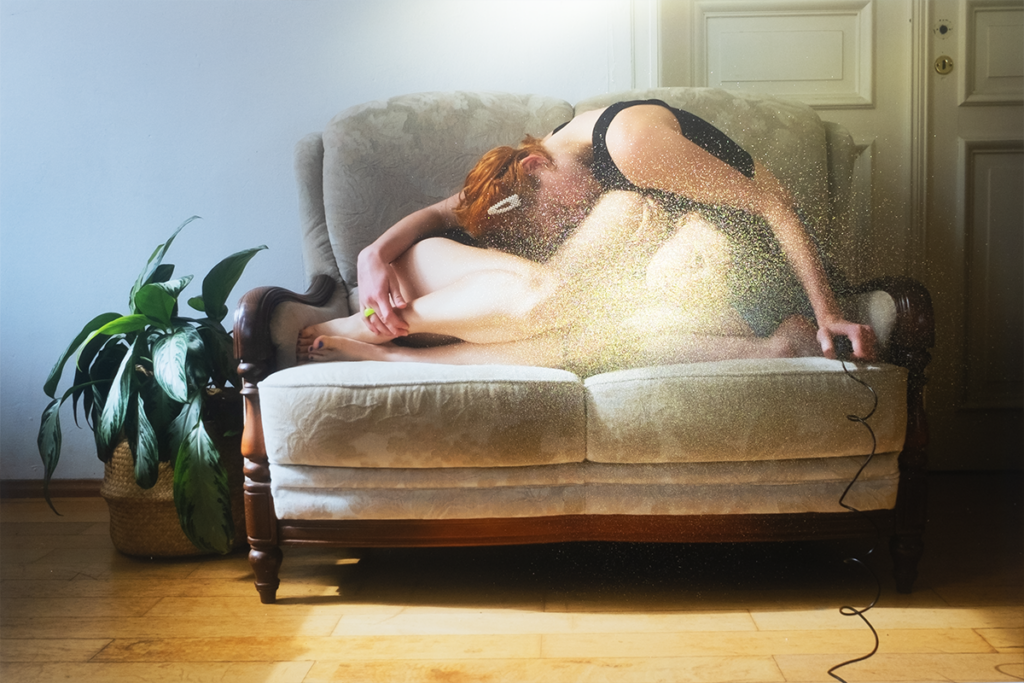
The photographs, repeated three times, show two anonymised queer bodies performing different identities. These bodies stage themselves and provoke us to rethink our deeply rooted norms and explore how these norms are embedded in the bodies. The bodies always move in the same private space and have an intimate relationship with each other. The photographs of the bodies make it possible to politicise the private sphere and occupy space in a public context that is rarely created for queer identities in our oppressive society. The image of the remote shutter release illustrates the power that the bodies reclaim to determine how they are viewed and to manifest this in the camera's gaze.
More about the work 🡒 hier
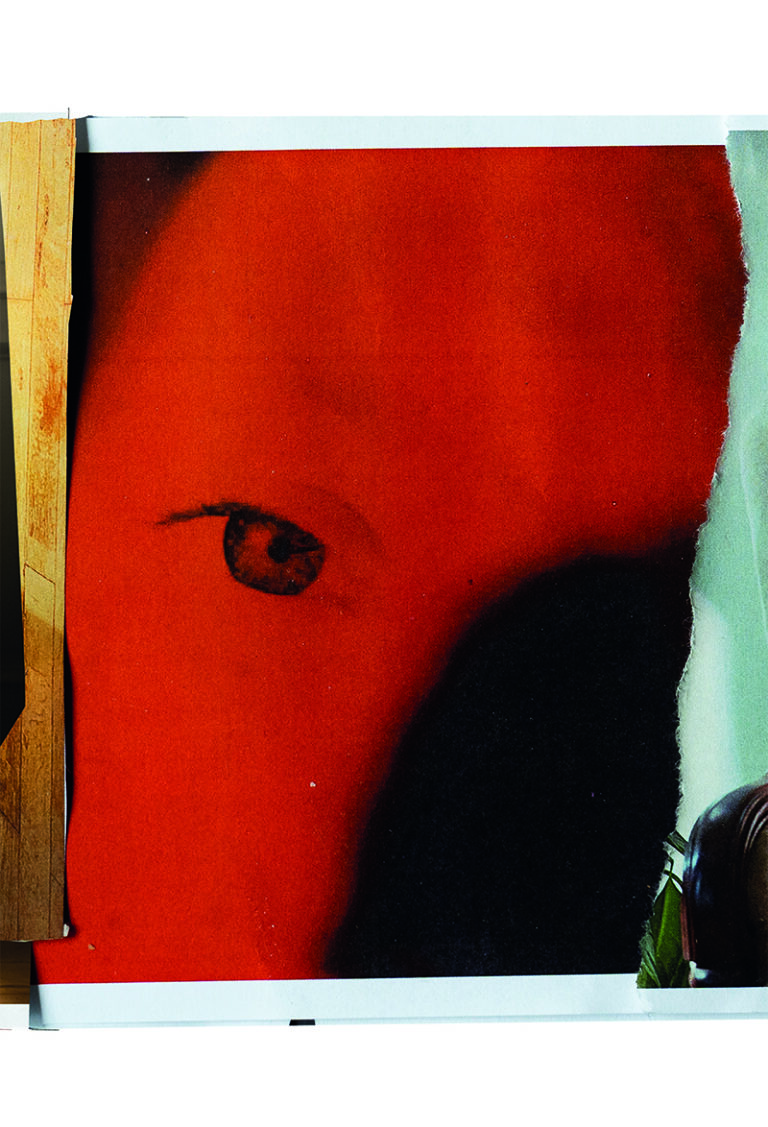
The picture shows an eye illuminated by red light. I don't know where it is looking, but that's not important. It is the moment of the gaze that fixes something and holds it for a brief moment before everything continues. The gaze is like a shell of uncertainty. As quickly as I recognise it and focus on it, it is gone again.
More about the work 🡒 hier
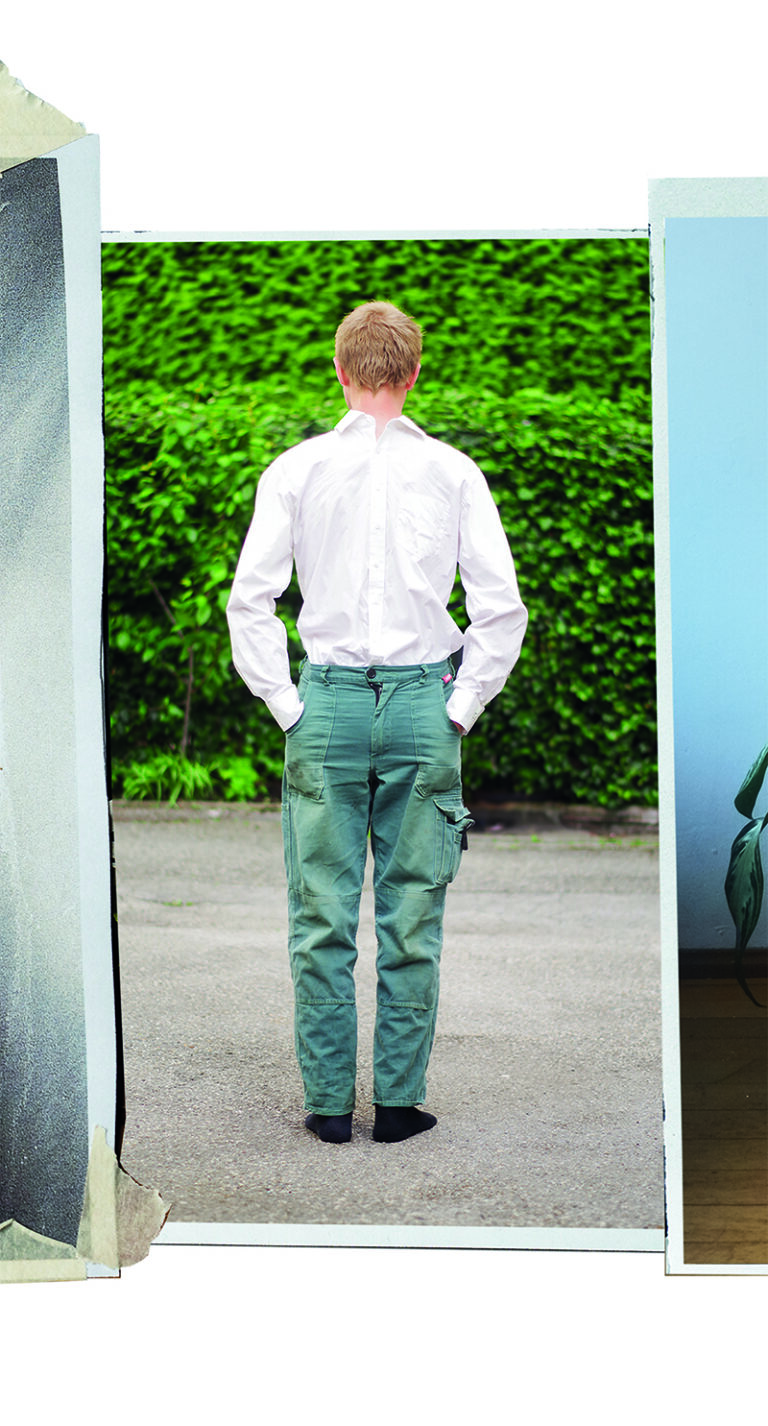
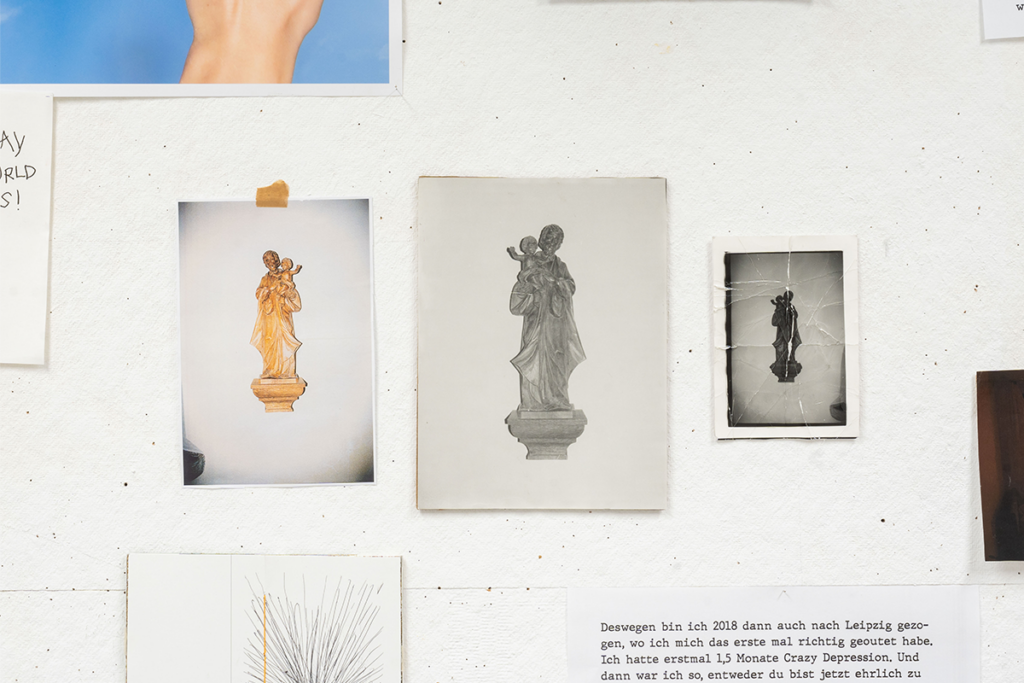
What you see is an upside-down person. It conveys the feeling of not fitting in and going round in circles in a world where there seems to be no way out. One no longer knows which way is up or down, feels out of place in one's own body and out of place in the world in which one grew up. It symbolises a constant search for something, but also the inability to find what is already there.
More about the work 🡒 hier
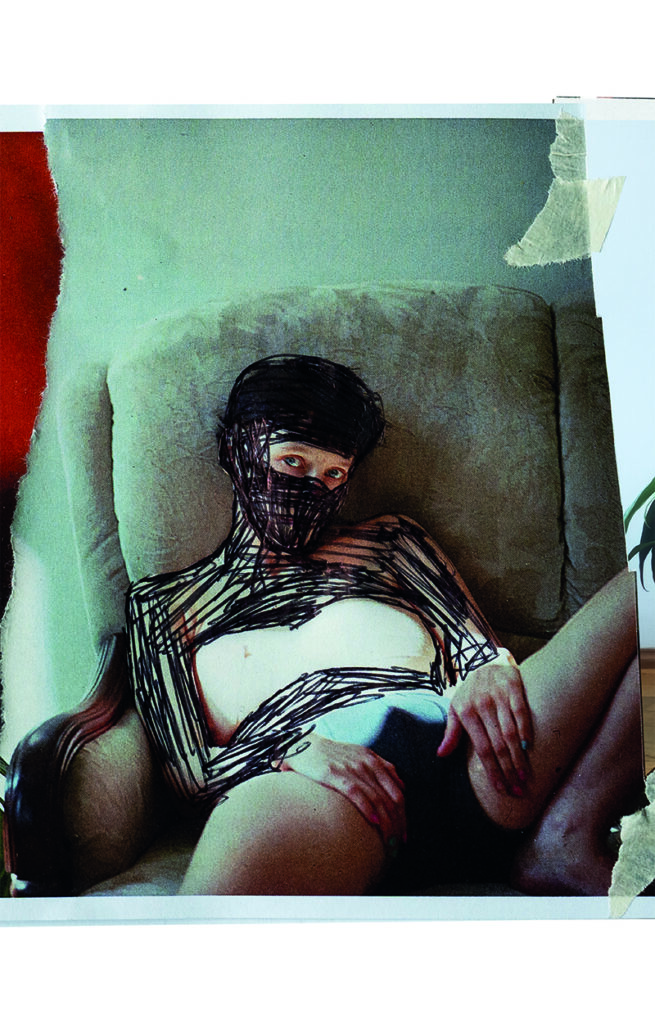
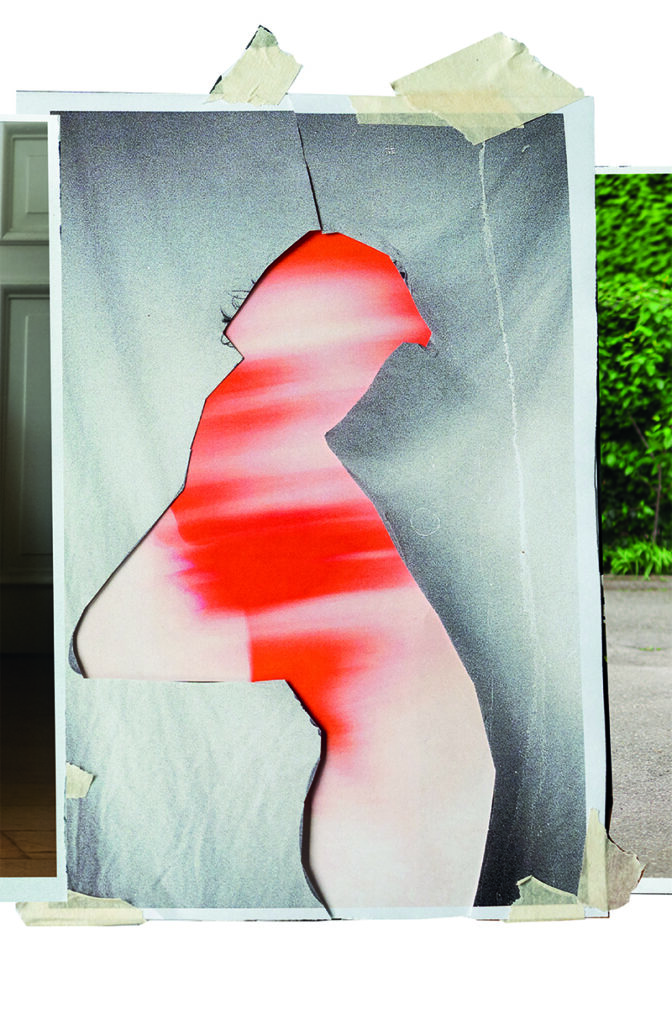
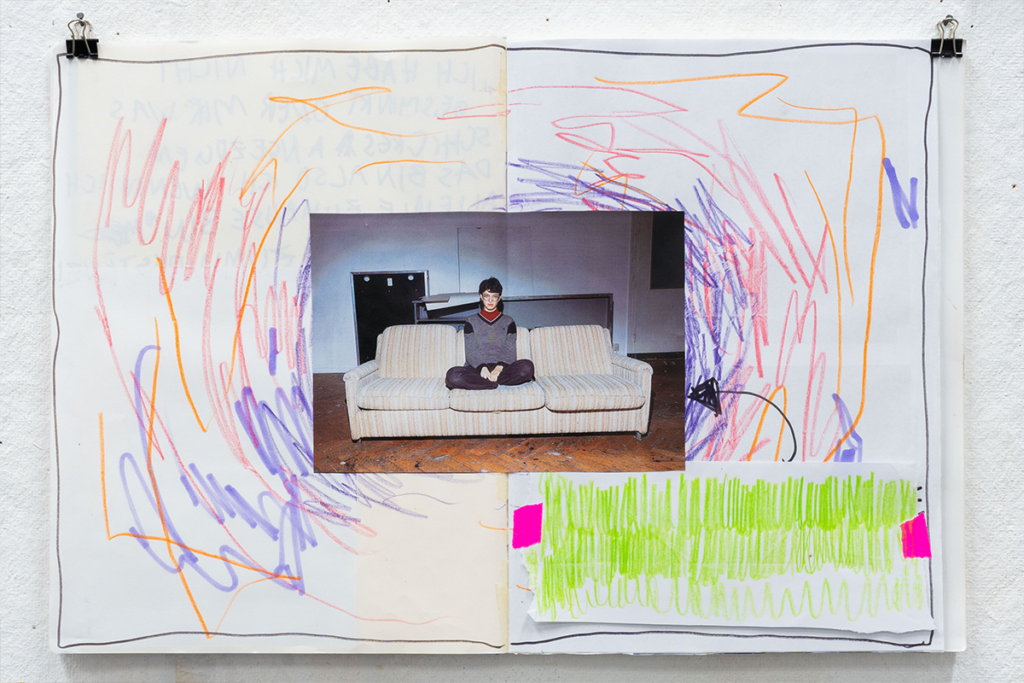
The images show a fusion of the work of both photographers. Collage techniques are used to re-stage and reinterpret the images. The work combines two pieces that complement each other and become one, but can also exist independently of each other.
Against silence
By Luki Stüwe @luki_stuewe
Seit ein paar Jahren ist ein gesellschaftlicher und auch politischer Umschwung in Deutschland nach rechts zu spüren. Spätestens nach der Wahl eines AfD-Politikers als Landrat in Sonneberg (Thüringen) ist klar, wie allgegenwärtig und präsent rechte Stimmen in Deutschland wieder sind. Besonders stark zu spüren ist dies in den letzten 4 Jahren.
The AfD, Free Voters and other right-wing conservative parties gained up to 10 per cent in all constituencies and displaced left-wing and more liberal parties from state parliaments and district committees in many parts of Germany. In addition to the openly racist policies pursued by these parties, they also have strong opinions on queer life. In the AfD's manifesto, for example, it places father, mother and child at the centre of its family policy in a very traditional way and warns against destroying the traditional image of the family. In schools, it rejects the ‘one-sided emphasis on homosexuality and transsexuality in the classroom’; children should not ‘become the plaything of the sexual inclinations of a vocal minority’. It campaigns for the abolition of the ‘General Equal Treatment Act (AGG)’ and ‘marriage for all’.
The impact of this policy on the lives of people with a migration background and/or queer individuals is illustrated by the latest nationwide figures for politically motivated crime in 2023, which reveal that violence against members of the LGBTQI+ community has doubled in the last two years and is continuing to rise.
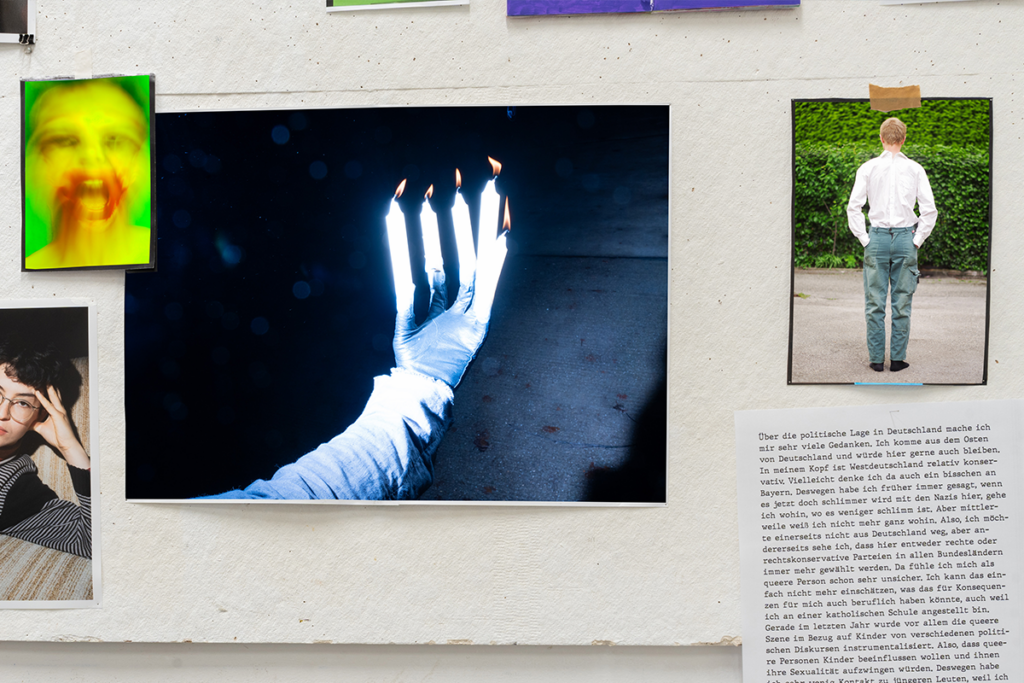
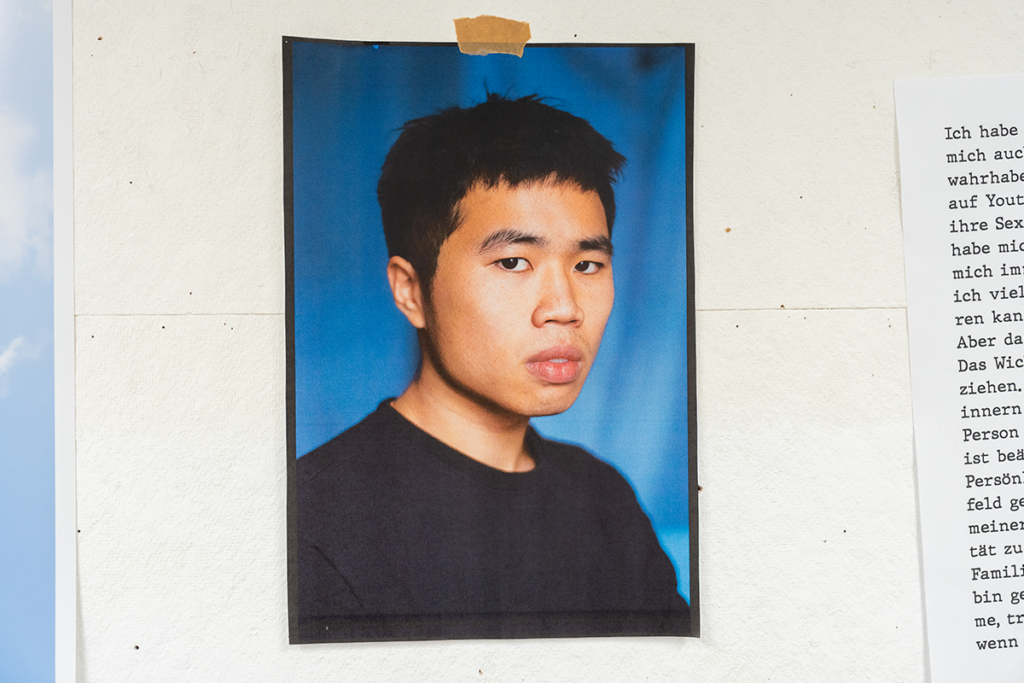
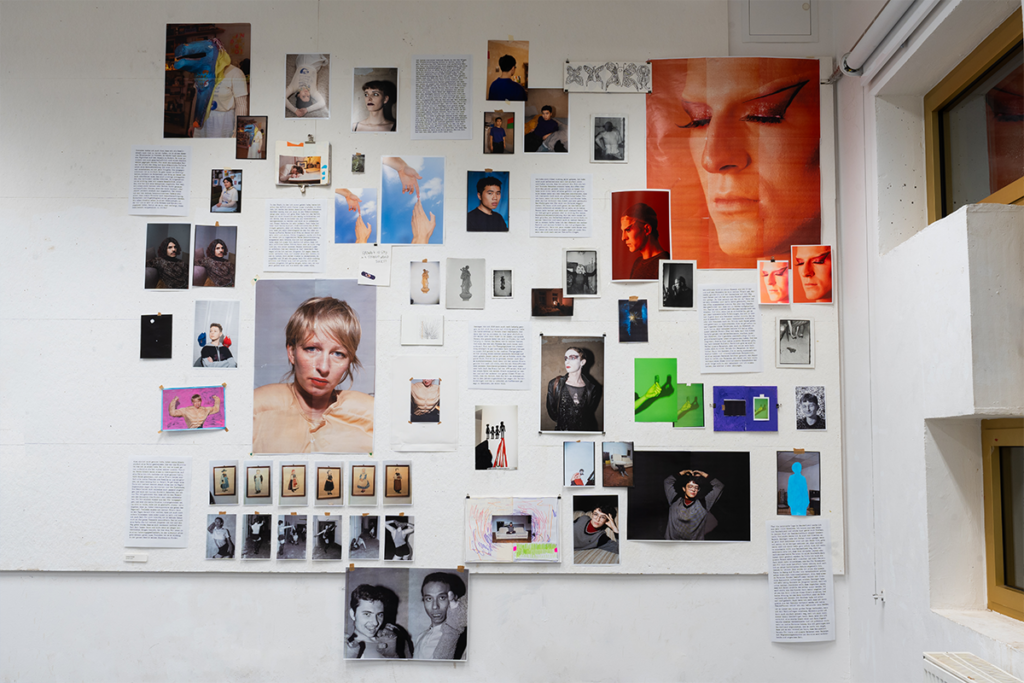
That is why Luki has been meeting with queer people for a year now, exploring questions about their current situation, concerns, hopes, connections to the community, and what is missing in their environment. Through photographic and cinematic explorations, Luki investigates how people are doing in their specific life situations. A central concern of this work is to offer queer people a platform and to engage in dialogue in order to capture and convey their individual perspectives.
Queering the body
By Lislesso
The photographs created collectively by Lislesso show two queer bodies staging themselves and independently performing different identities. The bodies confront us with the norms we have internalised and seek to reveal how these norms are inscribed in the bodies.
The bodies depicted break with the expectations of a cis- and heteronormative society and confuse the viewer when viewed from this perspective by highlighting the complexity of bodies. They emphasise bodies as complex entities and question the rigid classification of bodies into binaries. By presenting this classification as fluid, the categories gradually dissolve.
Violence against queer people exists and continues to rise. In order to protect the bodies and their identities, the decision was made to anonymise the photographs.
Was kostet das? (2024) - DE
Von Feydrea Vialista – Windmühlenstr. / Ecke Emilienstraße
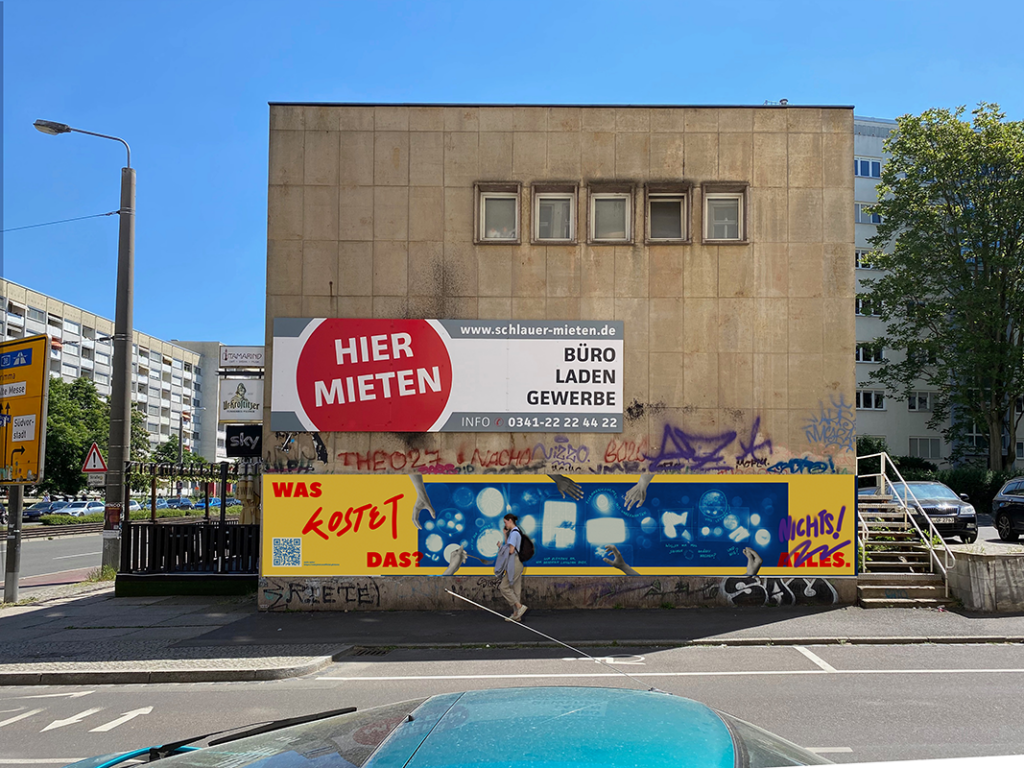
Was kostet es, eine dynamische, offene Gesellschaft zu gestalten? Eine Utopie, die uns als Gesellschaft nicht Alles, sondern Nichts abverlangt, wird abgebildet. Eine Anspielung an das Medium Plakat, was mit Werbung und Kapitalismus eng verbunden ist. Oben steht “Hier mieten”, was kostet das? Hier gibt es Kaffee und Kuchen, was kostet das?
Partizipation und Performatives
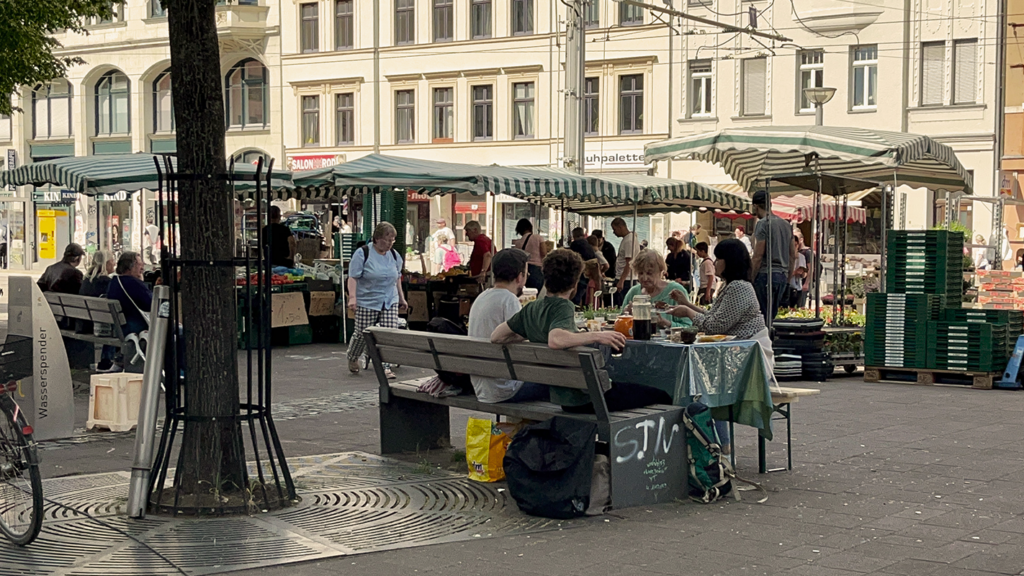
Markttag. Kulturen und soziale Schichten treffen aufeinander. Junge Familien erledigen ihre Einkäufe, während der Backfischstand seinen Duft verbreitet. Türkische Obsthändler verteilen ihre letzten Erdbeeren.
Zwei Personen richten fast unbemerkt einen Biertisch und Bänke ein. Eine gelb-grüne Tischdecke wird aufgeklappt, der Tisch wird gedeckt. Verschiedene Süßigkeiten laden Passanten ein. Die Tischdecke verändert ständig ihre Farbe. Haben Sie Lust auf Kaffee und Kuchen mit uns?
Essen um den Tisch
Das Plakat bildet eine vorher stattfindende Aktion am Lindenauer Markt ab, die das Thema „Zusammenkommen am Tisch“ behandelt.
Essen ist ein universeller Bestandteil unseres Alltags. Es ist nicht nur eine Grundbedingung des Lebens, sondern auch tief mit Kultur, Migration und Transformation verbunden. Das Teilen von Mahlzeiten am Tisch fördert das Zusammenkommen. Der Tisch wird zum Ort der Mediation, Diskussion und Konfliktlösung. Mit Essen als Medium schaffen wir eine Plattform, die Kunst für alle zugänglich und offen macht. Der Moment des gemeinsamen Essens hinterlässt kollektive Erinnerungen.
Belichtung auf der Tischdecke
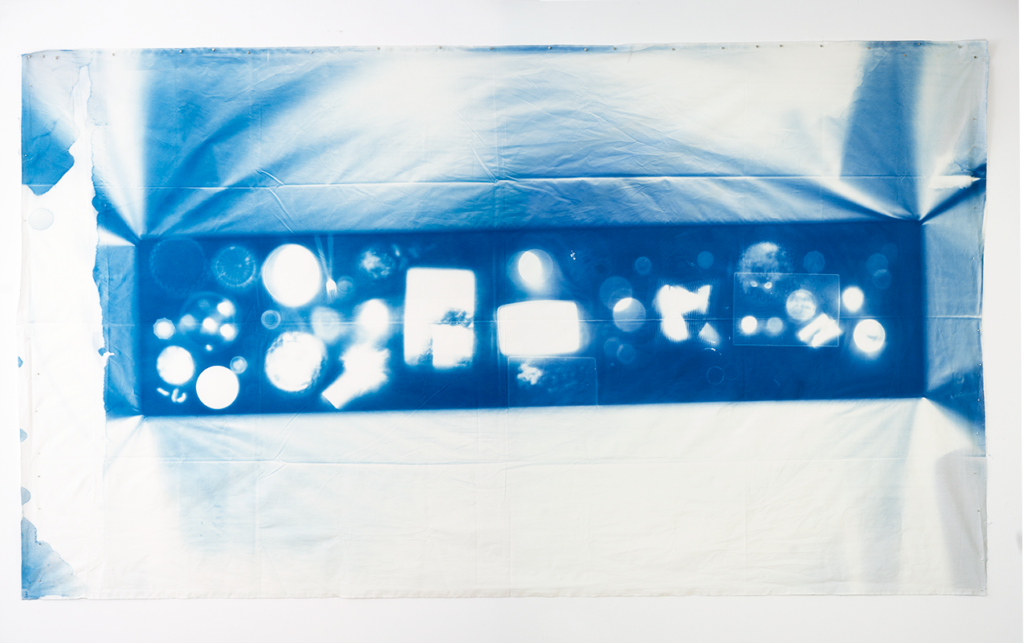
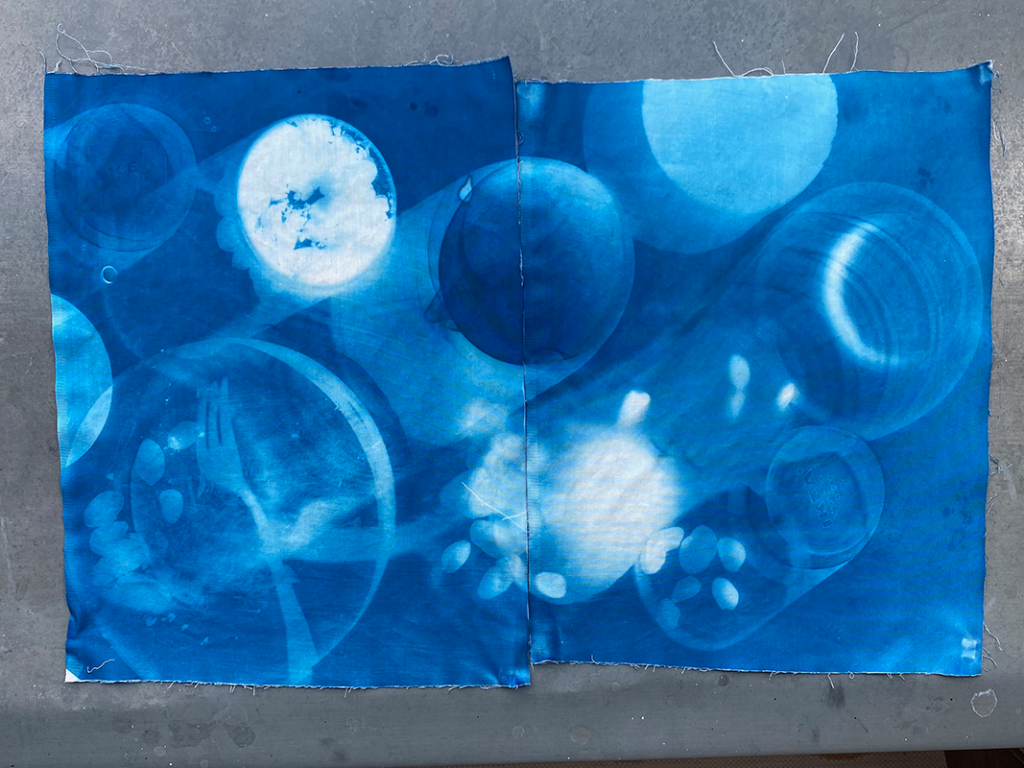
Wie flüchtig ist der geteilte Moment. Wie flüchtig erscheinen unsere Handlungen.
Die Tischdecke, getränkt in Cyanotypie, einer historischen fotografischen Technik, zeichnet unter Sonneneinstrahlung Spuren der Begegnungen und Bewegungen der Objekte nach. Diese Spuren erzählen Geschichten und verdeutlichen die Zeitlichkeit der Dinge. Wir sind eine Gesellschaft, die sich immer wieder verändert und die sich ständig verändern muss. Aber wie stark hinterlassen wir Spuren, wenn wir nicht aktiv werden, nach unserer idealen Zukunft zu streben?
Kann das preußisch-blaue Tuch als Archiv des Moments, Belichtung des vergessenen Alltags oder als Blaupause der Zukunft fungieren?
Das Gespräch
Heimat. Lebenssituation. Alltag. Veränderung. Vom Misstrauen zum Willkommensgefühl.
What does it cost?
Wo ist der Haken?
Wollen wir es anders machen? Aber wie?
Wir blenden uns ein. Wir gehören langsam dazu.
Die Tischdecke wird bronze-grau. Es ist Zeit abzubauen und den Stoff zu entwickeln.
What Does It Cost? (2024) - EN
by Feydrea Vialista – Windmühlenstr. / Corner Emilienstraße
What does it cost to become a dynamic, open society? A utopia that demands nothing from us as a society is depicted. It alludes to the medium of posters, which are closely tied to advertising and capitalism. At the top, it says „Rent Here,“ what does that cost? Here, there is coffee and cake, what does that cost?
Participation and Performance
Market day. Cultures and social classes collide. Young families do their shopping, while the smell of fried fish fills the air. Turkish fruit vendors distribute their remaining strawberries.
Two people set up a beer table and benches unannounced. A yellow-green tablecloth is unfolded, the table is set. Various sweets invite passersby. The tablecloth constantly changes color. Would you like some coffee and cake?
Food Around the Table
The poster represents a previous event at Lindenauer Markt, focusing on the theme of coming together at the table.
Food is a universal part of our daily lives. It is not only a fundamental necessity of life but is also deeply connected with culture, migration, and transformation. Sharing meals at the table promotes togetherness. The table becomes a place for mediation, discussion, and conflict resolution. Using food as a medium, we create a platform that makes art accessible and open to everyone. The moment of sharing food leaves collective memories.
Exposure on the Tablecloth
How fleeting is the shared moment. How transient our actions appear.
The tablecloth, soaked in cyanotype, a historical photographic emulsion, records the traces of encounters and movements of objects under sunlight. These traces tell stories and highlight the temporality of things. We are a society that must constantly change. But how strongly do we have to leave traces if we want to persist in striving for our ideal future?
Can the Prussian blue cloth serve as an archive of the moment, an exposure of forgotten everyday life, or a blueprint for the future?
The Conversation
Homeland. Life situation. Everyday life. Change. From distrust to a feeling of welcome.
What does it cost?
Where is the catch?
Do we want to do it differently? But how?
We blend in. We gradually belong.
The tablecloth turns bronze-gray. It’s time to pack up and develop the cloth.
Posters at the Moritzbastei
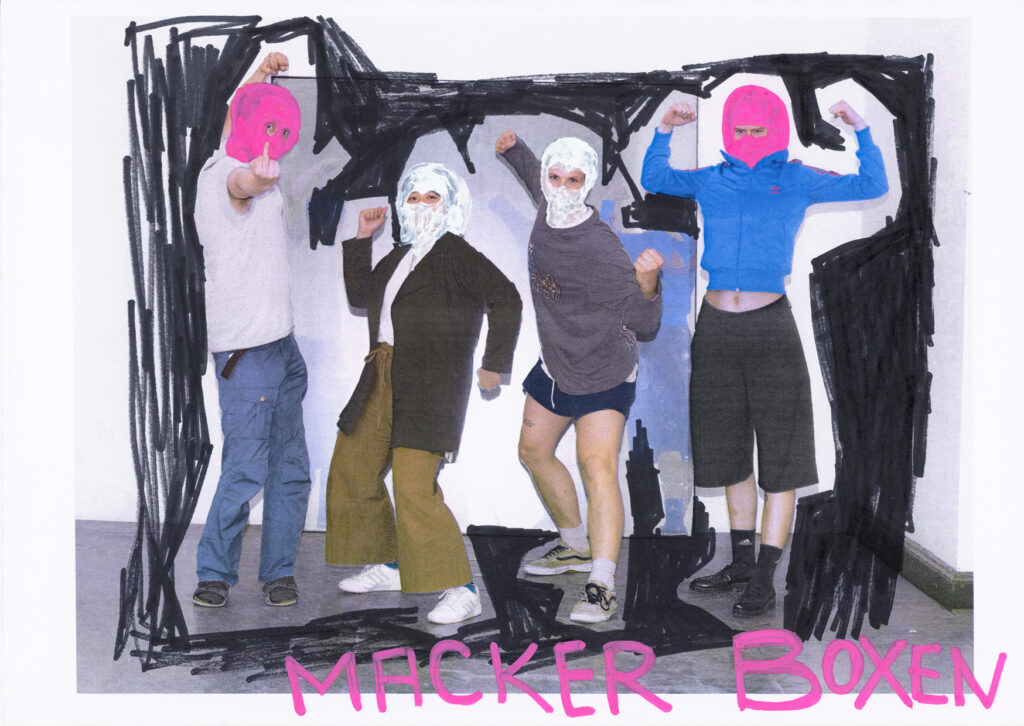
By Frieder Bickhardt – Moritzbastei
Disclaimer:
The work is aimed at privileged people.
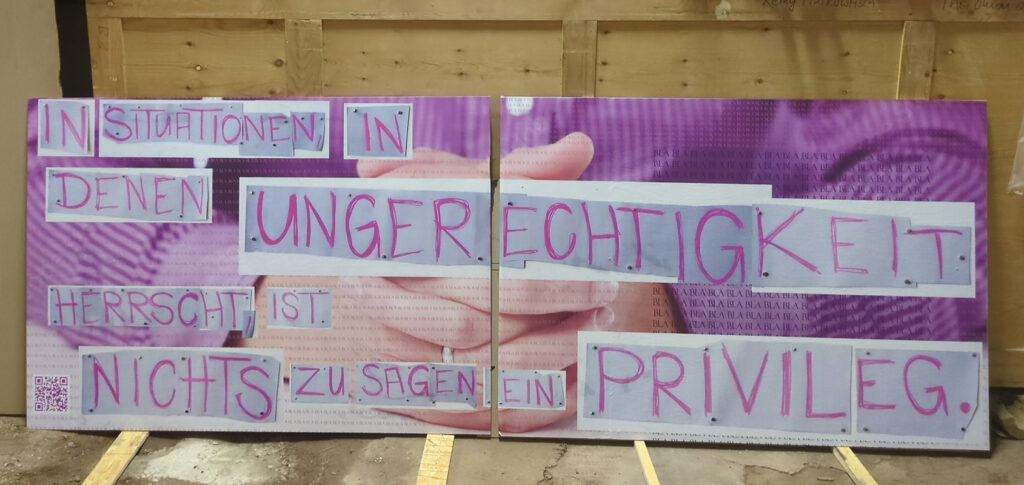
The slogans as polemics in text form:
It doesn't exist – your bloody firewall. Sure, the AfD is dangerous and should be rejected outright, if only from a patriarchal perspective. But it hasn't been the fundamental problem for a long time.
The problem is you – when you implement far-right policies, e.g. in Europe-wide migration policy.
The problem is you – if you are privileged and do not get involved.
The problem is you – when you walk past racist police checks.
The problem is you – when you don't speak up when queer people are harassed.
The problem is you – if you don't care that Jewish people once again have to be afraid of being Jewish in this country.
The problem is you – if you believe that a government or army can commit war crimes in order to destroy other war criminals.
The problem is you – because then you are exploiting your privilege of not being affected.
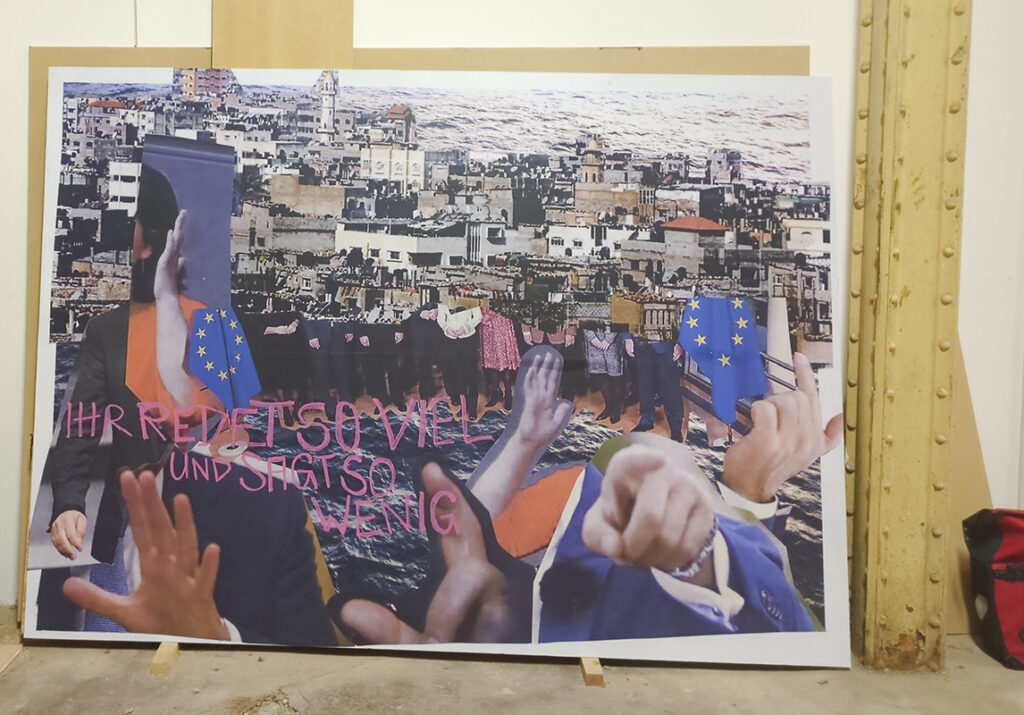
Process:
I generally enjoy doing photographic work that invites reflection, that meets viewers halfway, engages them, provides inspiration and, in the best case, leads to exchange and conversation. During the workshop, I realised how angry I am – about this hypocrisy, about this exaggerated self-care addiction in my own social bubble.
And then the decision was clear: posters are polemical, provocative and loud. Screw sitting in a circle, talking and exchanging ideas: today, I just want to punch you, chaps!
I am extremely privileged (cis/white/male/was able to study what I wanted/will inherit wealth) and I take advantage of these privileges: I, too, am often overloaded with work, overwhelmed by the state of this messed-up world, disappointed by this society. And I do nothing about it.
So with this work, I am also fighting myself: I want to kill my inner macho man. This is meant to be another step in that direction. And I am doing it publicly. As a kind of leap forward, so to speak.